The Radicchio Road: a taste itinerary to do by bike

The Radicchio Road: a chance to bike a tasteful route, pedaling along a gastronomic route In the typical production area of Treviso radicchio. But not only that: an opportunity to immerse oneself in the natural, historical and cultural value of the Veneto region, discovering its riches.

DEPARTURE: Treviso

ARRIVAL: Castelfranco Veneto

DIFFICULTY: easy

LENGTH: 127 km

TIME: 3-4 hours by bike

MAXIMUM ASCENT: 150m

MAXIMUM DESCENT: 127m

Itinerary

The gastronomic itinerary of the Radicchio Road connects Treviso a Castelfranco Veneto, passing through various locations and points of interest.

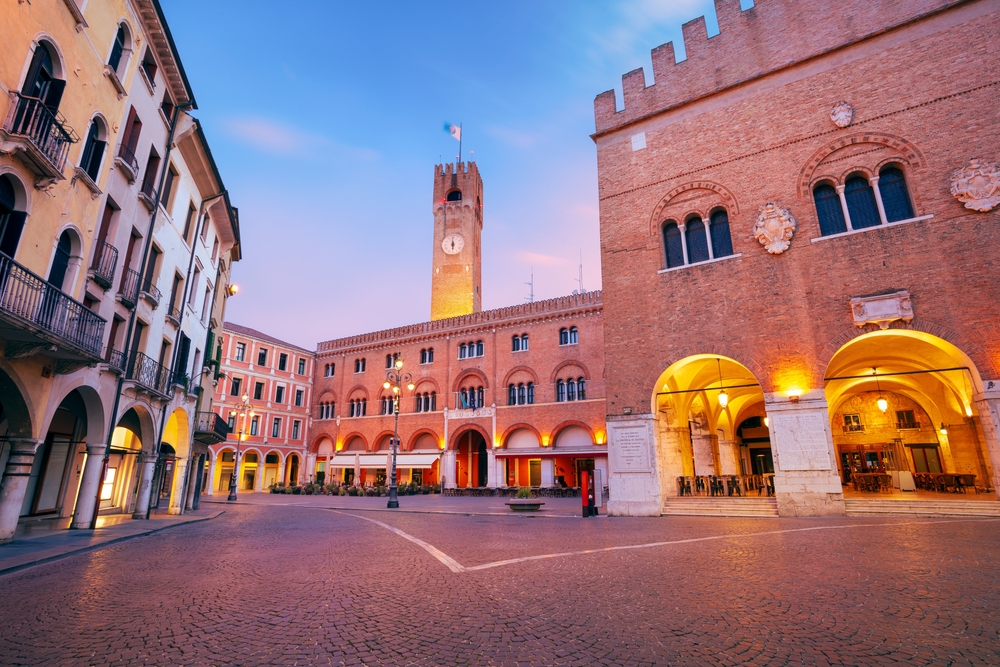
  1. It starts from the historic center of Treviso and, following the course of the Sile River, we cross the Quinto of Treviso. It continues to arrive at the’Cervara Mill Nature Oasis, a marshy nature reserve that covers 25 hectares and is hosted by the Sile River Regional Nature Park.

  2. The trail continues through glades and poplar groves, reaching Morgano and then Badoere.
    Here, bounded by the 18th-century arches of the Rotunda, there is a market for agricultural and handicraft products.

  3. The itinerary then leads to Levada, a hamlet of Piombino Dese, where it is located. Villa Marcellus: a symbol of Palladian art and among the best examples of Villa Veneta.

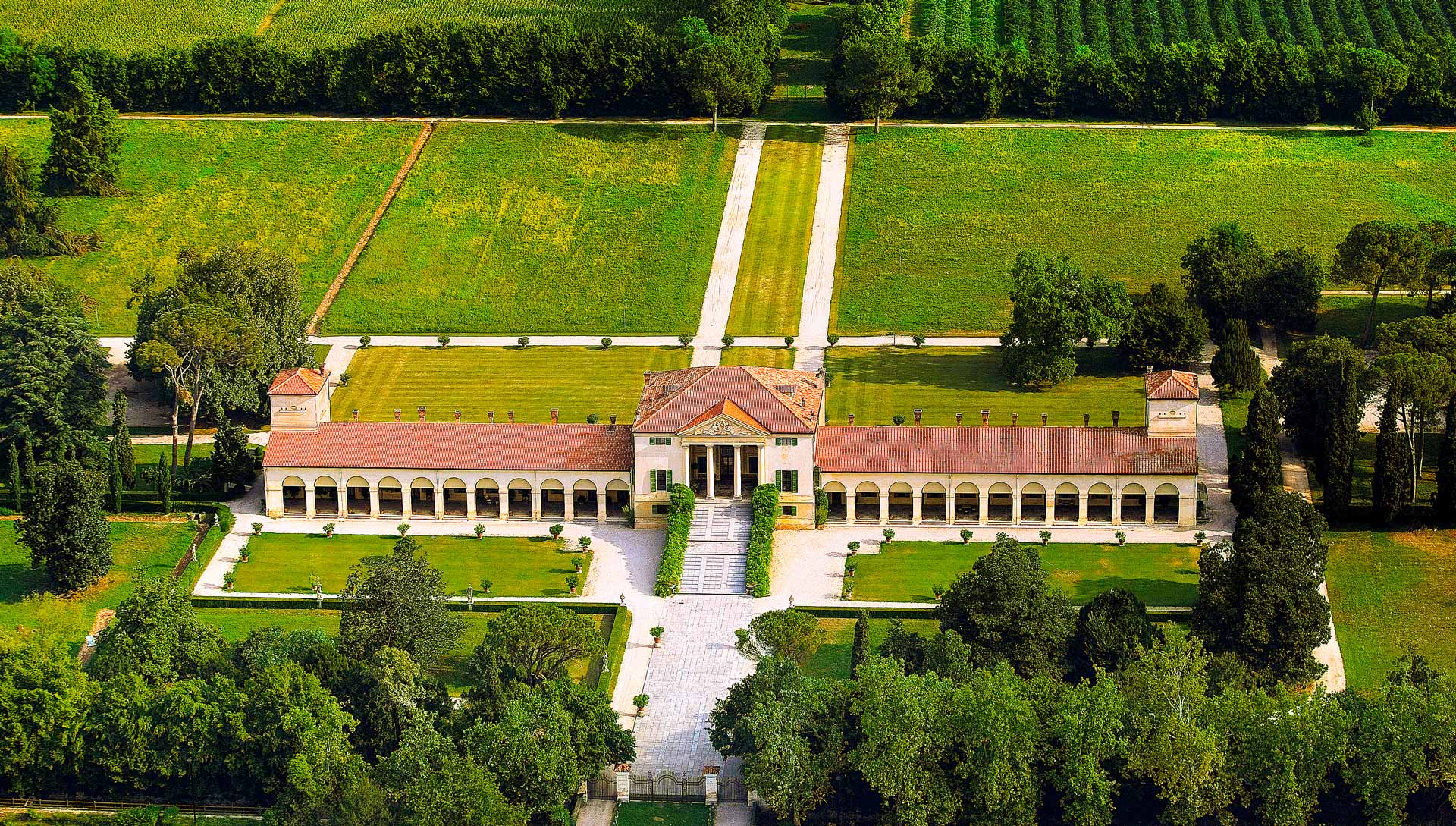
  4. The route continues north, crossing fields and vegetable gardens that are colored red with radicchio in autumn. It reaches Fanzolo, where it rises Villa Emo: another majestic representation of Andrea Palladio's art.

  5. We then continue westward into an area of important landscape value: the road alignments of the ancient Roman centuriation are still visible, where over time agriculture led to plots enclosed by hedges, vines and trees.
    Against this background we come to Godego Castle, which hosts Villa Priuli e Villa Martini.

The itinerary leads to the final stage: Castelfranco Veneto, village surrounded by a 930-meter-long wall with 6 original towers attached.

What to see and do along the Radicchio Road

The Radicchio Road is full of things to do and see. The must-do activities, as they encapsulate the heart and meaning of the course, are:

  • Visit and witness the production of the local specialty

In the hinterland of the Treviso brand there are numerous business realities that allow one to see the entire production cycle of the Radicchio trevigiano: how it is harvested, processed by hand, and subsequently packaged.

  • Indulge in a tasting
    There is the opportunity to taste local specialties and take part in buffets on farms, so you can discover the true flavor of Radicchio di Treviso IGP. Many proposals in this regard are offered by the’Road Association of Radicchio Rosso di Treviso and Variegato di Castelfranco: consortium of producers, industry operators, traders, restaurateurs and public agencies.

Among the things to see Along the way, however, it cannot be missed:

  • The Cervara Mill Nature Oasis (Santa Cristina di Quinto di Treviso)
    Entered in the Sile River Regional Nature Park, a few kilometers from Treviso, lies this reserve of great naturalistic interest. It is precisely for this reason that it has been classified as a Site of Community Interest (S.I.C.): the Oasis, enclosed between the courses of the Sile River and the Piòvega stream, offers refuge to wildlife and wild flora. Against this backdrop, a 14th-century mill still turns its wooden wheel, driven by river water.

  • Villa Marcellus (Levada)
    The distinctive Palladian-style Venetian villa has 16th-century origins, with extensions and decorations dating from the 18th century. Its interior is adorned with frescoes, paintings and precious furnishings, while its exterior consists of 9 acres of historic garden, dotted with statues and ancient trees. The whole is in turn immersed in the green Venetian countryside. The building also has a strong historical interest: during the years of the Great War it housed various Italian commands as well as King Victor Emmanuel III during the Battle of the Solstice (1918).

  • Villa Emo (Fanzolo).
    Here is one of Palladio's most famous Venetian villas. Built in the 16th century, since 1996 it has been included by UNESCO in the list of world heritage sites. The harmonious architecture is set in a very large garden, and it stands on the border between the wide Po Valley and the foothills of the foothills of the Feltre Alps. It is distinguished by two long columned barchesse, which frame the villa, and by a long path paved with square stones, which leads to the entrance. With an elegant and essential exterior, Villa Emo houses inside important frescoes by John Baptist Zelotti.

  • Villa Priuli (Castello di Godego).
    The villa enjoys great value for the spatial and harmonic relationships of its architecture.
    It is home to a Cultural Center, the Municipal Library and a Civic Museum.
    The latter, rich in archaeological finds, tells of the evolution of civilization in the area. In addition, the villa is decorated inside with a vast cycle of frescoes by Paolo Piazza of Castelfranco, painter of the 17th century.

  • Castelfranco Veneto.
    This charming village, the final destination, is also worth a visit. The first thing that strikes you are the imposing walls, from which arises among others the Tower of the Dead, all surrounded by a moat and a verdant meadow. Going deeper into the historic center is the Cathedral Santa Maria Assunta and San Liberale, a veritable treasure chest of works of art: attributed to Palma the Younger, Paolo Piazza, Giovanni Battista Ponchini and Giuseppe Bernardi.

The best known and most attractive is the Giorgione's Altarpiece: sixteenth-century oil painting that captures the viewer in a strong emotional involvement.
There is also the Giorgione House Museum (Casa Pellizzari), which, letting you breathe an ancient air, preserves precious objects and architectural reconstructions capable of telling the story of Giorgione's life. The visit is pleasant throughout the historic center, in the squares and along the walls.

Useful information and trivia

It is good to conclude with some useful information and trivia about radicchio and its Road, so as to give more value to the experience and experience it consciously.

  • The itinerary is walkable by all, even by the inexperienced: there are no particular difficulties, strenuous gradients or daunting terrain. In fact, it is also frequented by families and children.

    The Radicchio Road is also accessible all year round, also because it has several shaded areas or otherwise useful shelters.

  • The route is marked by appropriate signs, which indicate the route to be followed. Paired with them are information signs near natural, cultural and environmental points of interest.

    Of course, the wineries Of individual and associated companies, as well as typical productions agribusiness and handicrafts.

  • The project that originated the Radicchio Road has a well-defined goal: the territorial and enogastronomic promotion of the Veneto region, in which the Radicchio trevigiano is the undisputed protagonist. Given its centrality, so here is some information and trivia about it.

    Radicchio trevigiano IGP, to be authentic, must come from the’typical area located between the provinces of Treviso, Padua and Venice. In addition, it must be obtained according to the traditional Forcing and bleaching technique.

    The latter, which made possible the transformation of the bitter chicory into prized radicchio, is believed to be attributable to a precise historical fact: nurseryman Francesco Van De Borre, tending an English garden in Treviso's Villa Palazzi, allegedly imported the technique from Belgium.

    In any case, authentic Radicchio trevigiano is. recognizable by characteristics as: elongated shape, compact leaves, presence of a root part.
    The leaves are wine-red in color, with a thick white dorsal rib.

  • Another interesting fact: Radicchio Rosso di Treviso and Radicchio Variegato di Castelfranco were the first vegetables in Europe to be awarded the European Union quality seal PGI.

  • The Radicchio Road can be traveled independently or with the support of guides For those who prefer to rely on the latter, the special Association of the Road of Red Radicchio of Treviso and Variegated Radicchio of Castelfranco offers tourist itineraries, as well as delicious recipes.

In the municipality of Scorzé (province of Venice), the hamlet of Rio San Martino is home to the annual and important Radicchio Festival. The place is populated with food and wine stands, exhibitions-market of early and late Radicchio di Treviso, music concerts of various kinds, themed dinners, and varied performances.