The Piave River cycle path: from the Dolomites to the sea in 220km

The Piave River cycle path runs from the Dolomites to the sea, with a 220-km journey of discovery. It is indeed the right opportunity to get to know the beauty of Veneto, declined in naturalistic, historical, cultural and architectural places. To enjoy the experience to the fullest, it is advisable to know the itinerary, the places of interest that accompany the route and the information that may prove useful.

Itinerary

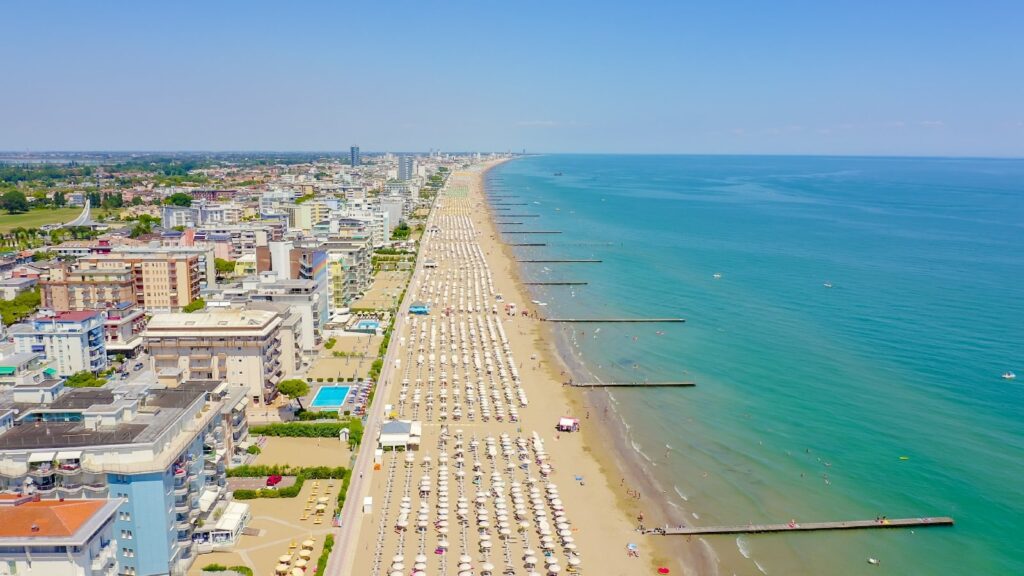
The Piave River bike path route follows the course of the river of the same name, starting from its sources in province of Belluno and reaching as far as the Adriatic Sea, in the near Jesolo.

The great protagonist is the Piave River, whose waters join the mountains to the sea, representing the thread that unites two Unesco World Heritage Sites, the Dolomites and the Venetian Lagoon, crossing a third, the Prosecco Hills.

The itinerary, which is 220 km long in total, is ideal both for lovers of the bicycle How much for those who prefer a walk on foot. It is also walkable:

  • Both going up which descending the Piave River.

  • In his entirety, selecting only some stages or by following themed itineraries.
    These include that of the Great War, villas, museums, castles, frescoed churches and abbeys.

The itinerary can be divided into. three main routes, each relating to a different province of Veneto that is passed through:

  1. Route in the province of Belluno
    In the province of Belluno, the bicycle path stretches for 110 km total. It starts from Belluno and arrives near Lentiai, passing through municipalities such as Sedico, Trichiana and Mel. This section is almost entirely flat, with a maximum elevation gain of 248 meters: a factor that makes it rideable even for less experienced cyclists.

    This first part of the Piave bicycle path winds through villages, frescoed churches, villas and museums that already allow you to get a taste of the beauty of the Veneto region.

  2. Route in the province of Treviso
    In the province of Treviso, the bicycle path stretches for 90 km total. From Lentai, we continue toward Valdobbiadene, and then reach Susegana.

    In this section we travel along part of the Prosecco High Road, which winds through vineyards and verdant hills. This time, too, the elevation gain is not excessive: it is about 220 meters.

    This part of the Piave River bike path reveals the naturalistic beauty of the area, which is combined with points of historical and cultural interest.

Route in the province of Venice
In the province of Venice, the bicycle path stretches for 20 km total. From Susegana proceed to Musile di Piave, and then continue in the direction of Jesolo.
 The route of this final section is even less challenging. As there are no particular inclines or uneven terrain, the quiet pedaling allows you to enjoy the surrounding landscape.

This section of the bicycle path is accompanied by the waters of the Piave River, which, as it approaches the sea, flow gradually more calmly, inviting relaxing contemplation.

Places of interest

Various places of interest wind along the Piave River cycle path.

Already the Piave River itself is rich in meaning, as a symbol of an important part of Italian history: considered Sacred River of the Fatherland, was the scene of great wars and the success of Venice in the 15th and 16th centuries.

The Piave River represents the link between the northern and southern lands, marking the transition from Arctic to Mediterranean microclimates. It represents the union between the Alpine and lagoon biodiversity which, despite their diversity, are generated by the same phenomenon: in fact, the Dolomites derive from the interaction between the sea and the land in exactly the same way as the lagoon, which arose from sediments from the Alpine basin, shaped over time by sea currents.

Even the places of interest encountered along the bike path are rich in cultural-historical as well as naturalistic significance. Starting with those in province of Belluno, which provide breathtaking views of the Dolomites, the main ones are:

  • Church of the Holy Cross (Pialdier hamlet, Trichiana)
    The small church houses a very valuable fresco in the side chapel, dating from the 16th century and created by the painter Paris Bordon. He was a pupil of the well-known Titian Vecellio, a Renaissance painter originally from Pieve di Cadore.
  • Archpriest's Church of St. Mary of the Assumption (Lentiai)
    Declared a National Monument in 1880, the church contains important artistic relics. Among them are the works of Caesar Vecellio (uncle of the aforementioned Titian), whose frescoes even come to adorn the wooden coffered ceiling, giving it incredible charm.
  • Castle of St. Jerome (Quero)
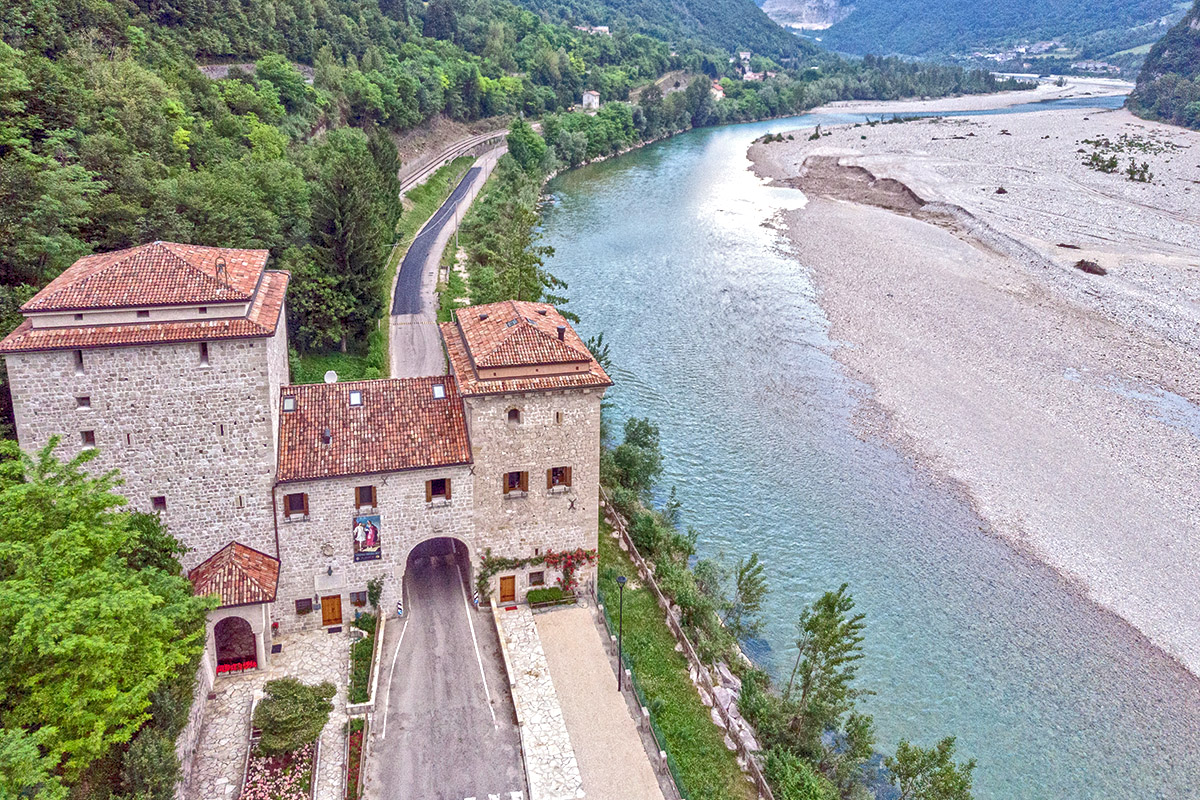
    Also called Castelnuovo, the fortified complex dates back to the 14th century. Touched by the destruction of the Great War, it was bombed in 1917 and later restored. The structure, made entirely of stone, retains a large arch in the central body. At one time it closed with two gates and two drawbridges; today it is still flanked by two massive towers of different heights.

Continuing with the second route, the main places of interest in province of Treviso Are:

  • Prosecco Road (Valdobbiadene and Conegliano)
    The Piave bicycle path intercepts this naturalistic and very characteristic route of the Veneto region. These are the vineyards from which Prosecco wine originates, winding through verdant hills, small villages, cottages and wineries.
  • Benedictine Abbey of Santa Bona (Vidor)
    The Benedictine abbey has medieval origins and is a historical landmark in the area. It is nestled in the green countryside: a natural area called the Palu, which constitutes an important biodiversity reserve of flora and fauna. Its preservation to this day is due to the reclamation works of the then Benedictine monks.
  • The Island of the Dead (Moriago della Battaglia)
    Here is one of the places inextricably linked to the Great War: the last days of October (1918) the battle that led to its end was held here. The name of the place comes from those very days: bodies of soldiers who fell in battle covered the entire surface of what is now a beautiful garden.


  • White Fountains Oasis (Fontigo, Sernaglia della Battaglia).
    The nature area owes its name to the water that gushes from numerous resurgences meeting the white pebbles of the Piave River area. The local flora includes orchids, thorny olive trees and white willows, while the fauna features migratory birds such as kingfishers, mallards and grey herons. An all-natural spectacle, among the most beautiful in the middle Piave River!
  • Shrine of Saints Victor and Crown (Anzù, Feltre)
    The architectural complex is located at an elevation of 344m, nestled among the mountains in the background, and is part of the Italian National Monuments. The basilica is an authentic Romanesque jewel and bears clear signs of Armenian and oriental influences. The interior is completely frescoed (12th-15th centuries) with works from the Ottonian period, the Giotto school and students of Thomas of Modena.
  • Castles of Collalto and San Salvatore (Susegana).
    Collalto Castle, a place of historical legends, preserves among the trees and hills the remains of the tower, parts of the walls and the main gate. The castle of San Salvatore rises imposingly over the town of Susegana and stands as one of the most extensive of the late medieval period.
  • Jonathan Collection Museum - Famous Historic Airplanes - O.N.L.U.S.. (Nervesa della Battaglia)

This is a unique historical aviation museum: it is located inside a hangar dating back to the Great War and preserves original vintage aircraft. It is possible to watch some air shows that bring to life the atmosphere of the early 1900s.

There is finally the third and final leg, in the province of Venice, dominated by reclaimed areas that have made the area habitable and visitable.
In this section it is possible to admire:

  • Church of St. Maurus Martyr (Noventa di Piave)
    Also reeling from the bombing of the Great War, it preserves many valuable works. Among them the Astile Cross, dating from the late 14th century and considered one of the most valuable art treasures in the Veneto region. It is joined by frescoes, paintings and sacred works in all their value.
  • Piave Monument (Musile di Piave)
    Just a few meters from the bridge over the Piave River, hidden by lush vegetation, are two monuments commemorating the battles fought there during the Great War. These are blocks of Istrian stone about 5 meters high and 80 cm thick, dating from 1934.

River park (Fossalta di Piave)
Wildflowers, squirrels and shady trees surround the river. Peaceful nature bathes the banks of the Piave River and allows for some relaxation.

Useful information

Finally, here is some useful information to enhance the experience and come to it prepared:

  • The Piave River cycle path does not present any particular difficulties: it is mostly flat, with little elevation gain, and is passable even by the less experienced. So it is suitable not only for cyclists seeking competitive performance and an adrenaline experience, but also for those who enjoy cycling in peace Savoring the surrounding beauty.

  • For those who prefer, there is the possibility of resorting to local guides who accompany along the route and organize visits to places of interest.

  • Useful clothing and equipment: it is advisable to wear sport sunglasses, helmet and comfortable clothing. An easy-to-carry tire repair kit might prove useful, so as to avoid snags during the long ride.

  • Along the Piave River cycle path are several agritourisms and farms in which it is possible to savor local specialties and indulge in a restorative break. There is no shortage of all kinds of cheeses, honey, nuts and, of course, the well-known Prosecco.

  • If you are in the province of Belluno between the second and third week of October, it is interesting to take part in the exhibition-market Apples in Mel. More than 100 exhibitors populate the small town, offering drinks and dishes made from local apples. Owners of ancient villas and palaces in the historic center open their courtyards, allowing visitors to immerse themselves in an evocative atmosphere. Old-time games and ancient crafts enliven Mel by recreating the ambiance of its past.