Trovating in the city of Treviso, there are 10 things. by see absolutely. These are the places that most characterize the Veneto location, giving it a unique and distinctive charm.
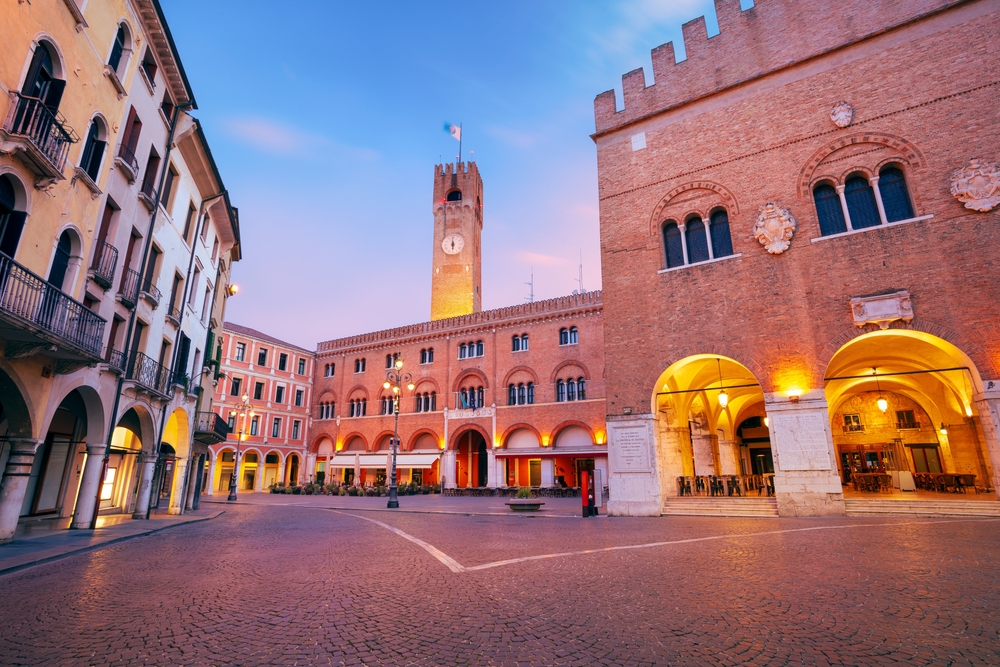
It is the most important square in Treviso, the heart of the city, and has always been a historical and cultural center: it is the’ancient meeting point from Roman times, a place for political discussions and gatherings. It derives its name from the presence of palaces of the ancient Treviso Seignory, which overlook the very elegant and well-kept square surrounded by arcades, stores and bars.
Piazza dei Signori is the Ideal place to indulge in a break and an aperitif, accompanied by the characteristic cicchetti: small slices of bread topped with local specialties.
The square is within easy walking distance or by bike From any point in the historic center.
It is 850m from the train station and is served by lines 1 and 7 (the stop is just called Piazza dei Signori).
Dominating the main square, with its red brick and elegance, is the Palace of the Podesta. Dating back to the 1400s (a date from which it has experienced various renovations), it takes its name from its former function: to house the Podesta of Treviso.
Behind him is the Civic Tower, with all its grandeur: reaching about 48m, it claims the record of the tallest building in the city. It is one of Treviso's most representative monuments.
Built in 1210, it is one of the most important examples of Romanesque architecture in Treviso and the nerve center of its ancient political-administrative life.
In 1944, the Palazzo dei Trecento was subjected to a disastrous bombing, the wounds of which it still retains today: a row of rearmost bricks is visible on the facade, distinguishing the original walls from the reconstructed ones.
The name is due to the 300 members of the City Council, whose meetings are still hosted by the red brick arches. In addition to them, the Palace hosts various exhibitions and displays: those scheduled can be found on the official website, which contains information on themes, hours and prices.
Just 100 meters away is another important symbol of Treviso: the Knights' Lodge, a historical landmark and ancient forum of the nobles of the time (13th century). The Palazzo dei Trecento is also located in the Piazza dei Signori.
Via Calmaggiore, which connects Piazza dei Signori with Piazza Duomo, is the most important and characteristic alleyway in Treviso's historic center. Along the street it is possible to admire the remains of the ancient Roman road e several frescoed palaces which, juxtaposed with boutiques and storefronts, mark the marriage of history and modernity.
In the courtyard of a small gallery, which connects Calmaggiore Street with the Tower Square, is a reproduction of the Boob Fountain. Featuring the bust of a woman, from whose breasts water gushes forth, it is a reconstruction of the original (dating from 1559 and now preserved in the Palazzo dei Trecento). From the latter, designed for the celebration of the new mayor, wine flowed for three days in the past: red from one breast and white from the other.
Via Calmaggiore is easily accessible on foot or by bicycle from any point in the historic center. It is the street that connects the Palazzo dei Trecento with Treviso Cathedral (400m apart). It is 1km from the train station.
Treviso has always been surrounded by a wall, which encloses the historic center and is in turn framed by waterways. Until the fairly recent past, access to the city was through the three Treviso gates: St. Thomas Gate, Porta Santi Quaranta e Altinia Gate.
The first, erected in 1518, is located in the northeastern area and is the most majestic. With its reference to classical triumphal arches and its characteristic dome, the gate houses the statue of the lion of St. Mark: evidence of the city's importance in the Republic of Venice.
The second, erected in 1515, is located to the west. A symbol of government strength, it has a deliberately more sober façade, although it does not lack Renaissance references.
The last one, erected in 1514, is located south of the city. Its appearance is less majestic and simpler, but graceful. The gate served for a long time both as a military bulwark and as Treviso's link with Venice: all goods that did not pass through the Sile passed through there.
The walls and the three gates are easily accessible on foot or by bicycle from the historic center. From the train station, the center can be accessed via Porta Altinia, which is 400m away.
L’isle of Pescheria si is located right in the center of Treviso, on the Cagnan Grando River, and is accessible via two small bridges that can be crossed by foot or bicycle.
The name of the islet comes from the Fish market that has been hosting every morning since 1850.
It is an unmissable opportunity to savor the daily life and tradition of Treviso: there is no shortage of typical specialties and fish that is always fresh! It is also an opportunity to admire one of the ancient mills, used to wash the pawnshop square When the fish market was located on the mainland.
The island is located 350m from the Piazza dei Signori.
La Church of St. Nicholas boasts important records: it is the largest building in Treviso and One of the most outstanding examples of the Gothic style in all of Italy! Built in the 12th century by Dominican friars, this structure also experienced major restoration following the 1944 bombing.
Its three naves reveal precious treasures: frescoes by Tomaso da Modena and his pupils (14th century), a large organ by Gaetano Callido with painted sashes, the burial monument of the Senator Romano Agostino Onigo.
The church is located 700m from Piazza dei Signori (Via San Nicolò No. 50) and is easily accessible on foot or by bicycle.
The complex of St. Catherine's is now the headquarters of the Treviso Civic Museums, which also include the Ca’ Da Noal-Casa Robegan-Casa Karwath complex and the Luigi Bailo Museum.
St. Catherine's (as well as the others) is located in the historic center and, in addition to the museum, includes the Church of St. Catherine of the Servants of Mary and the convent.
The church is Gothic in style and contains frescoes dating from the 14th-15th centuries, while the monastery houses two cloisters surrounded by greenery and a historical-archaeological section (with evidence from even the earliest settlements in the area).
St. Catherine's is within walking or biking distance from anywhere in the historic center. It is 500m from the Piazza dei Signori.
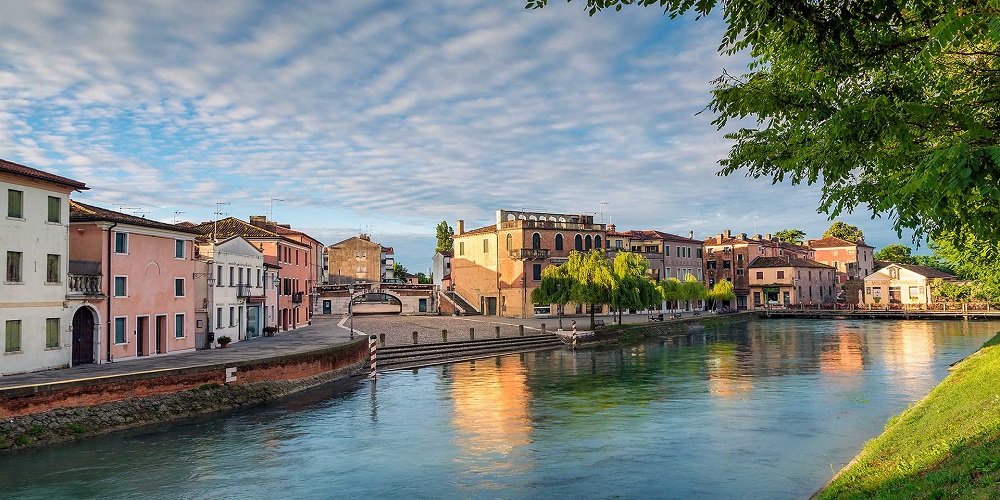
Here is one of the most striking views of Treviso. This is a branch of the Botteniga River, which runs through the city arriving in the historic center, creating wonderful water features on its way, enhanced especially during the Christmas season, when warm lights are installed and reflected in the canal, creating an exciting spectacle.
But its appeal is not only in winter: in the second half of June, the the Buranelli Festival. The eponymous underpass comes alive with concerts, performances and tastings of local specialties.
Canale Buranelli is located at 4 Campana Street, 220m from Piazza dei Signori and 1.1km from the train station.
Better known as the Cathedral, the Cathedral of St. Peter the Apostle falls among Italy's national monuments: those that the state has deemed historically relevant and a landmark symbol for the nation.
The cathedral (the construction of which began in the 6th century) is characterized by its seven domes, its wide frontal staircase and the six Ionic columns that tower over it imposingly. But that's not all: inside it holds precious works such as the’Annunciation by Titian. Romanesque meets neoclassical style in a reminder of ancient Roman and Greek temples.
Treviso Cathedral is located at Piazza del Duomo No. 1, 290m from Piazza dei Signori.
The city is fascinating, but also in the province of Treviso there are 10 must-see things to immerse yourself in nature and history.
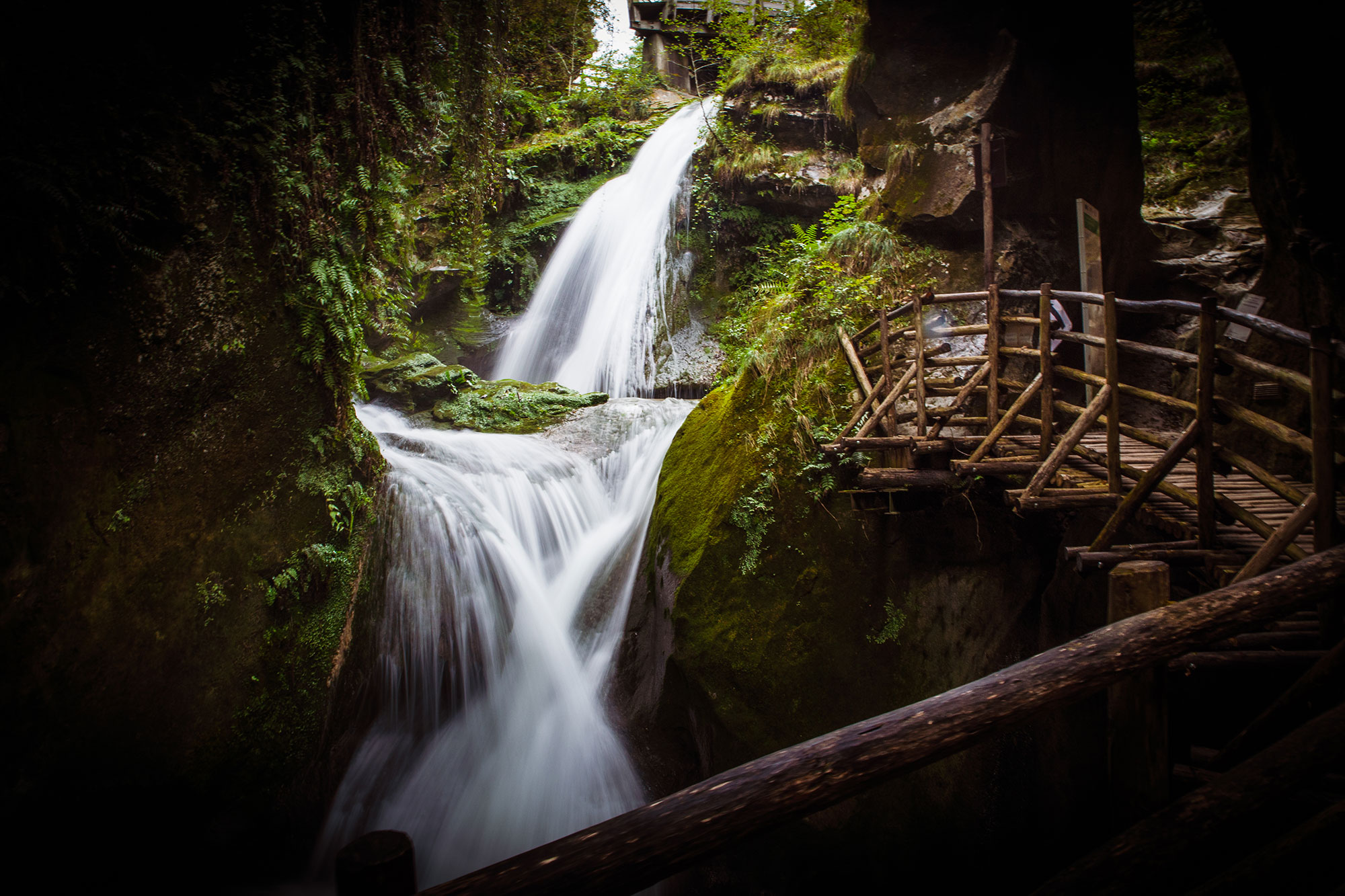
A walkway suspended between rocks accompanies among caves, waterfalls, natural pools and tropical-flavored vegetation.
The loop trail is 1km long, so generally the duration of the visit is 1 hour. The trail is not particularly difficult and is suitable for everyone, including children and dogs. You just need to be careful at some points, which are more slippery. Comfortable and sporty clothing is recommended.
The full price is 3.50 euros. For children up to 12 years old it is free.
Paid parking costs 2 euros per hour.
This protected natural area stretches along the course of the Sile, the longest spring river in Italy.
The park contains natural, plant and wildlife treasures characteristic of the resurgent and rural areas. But it also has historical-anthropological-cultural interest, including infrastructure related to human history in the area.
The bicycle and pedestrian path is recommended, the so-called Sile Greenway: a hike from Treviso to Jesolo that presents no particular difficulty and covers 52 or 63km, depending on the destination (Jesolo town or lido).
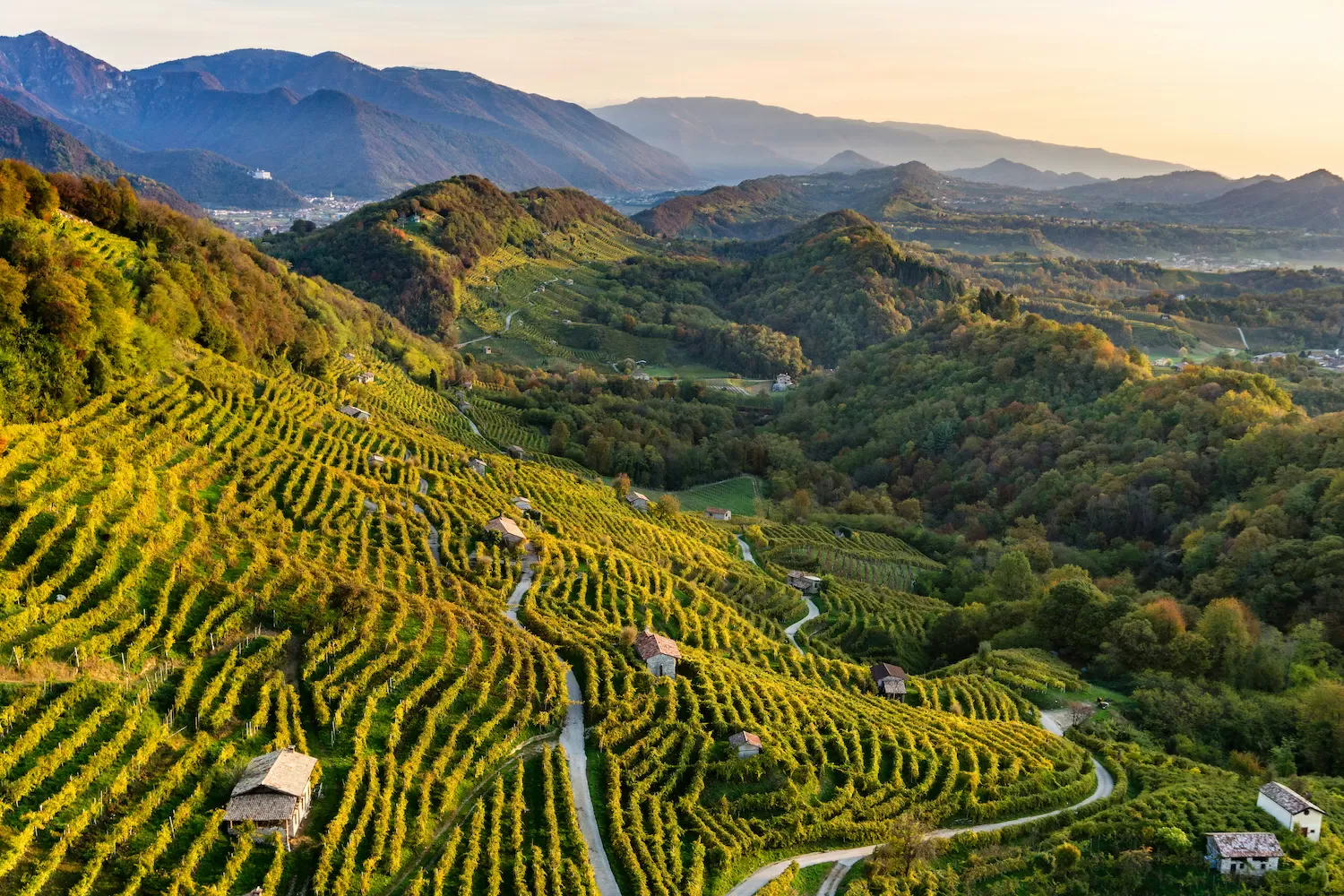
The Prosecco Hills of Conegliano and Valdobbiadene are. UNESCO World Heritage Site. An expanse of vines, from which the well-known Prosecco Superiore DOCG originates, stretch between hills and verdant forests.
It is recommended that the Prosecco Hills walk, which covers 50km divided into 4 stages and offers incomparable views. You can also stop for a break at local wineries and indulge in wine tasting against the rural backdrop.
This village is among the most beautiful villages in all of Italy and offers many opportunities. Every August, “Artigianato Vivo” is held: an event related to the local manufacturing tradition, ancient arts and crafts, enriched by concerts and food and wine exhibitions.
Within walking distance of the historic center is the Castelbrando: one of the largest and oldest castles in Europe, providing unmissable views. In addition, Borgo Cison di Valmarino is the starting point of many excursions, with routes for walking, biking and even horseback riding.
Significant sites of the Great War, which still preserve the memory of it.
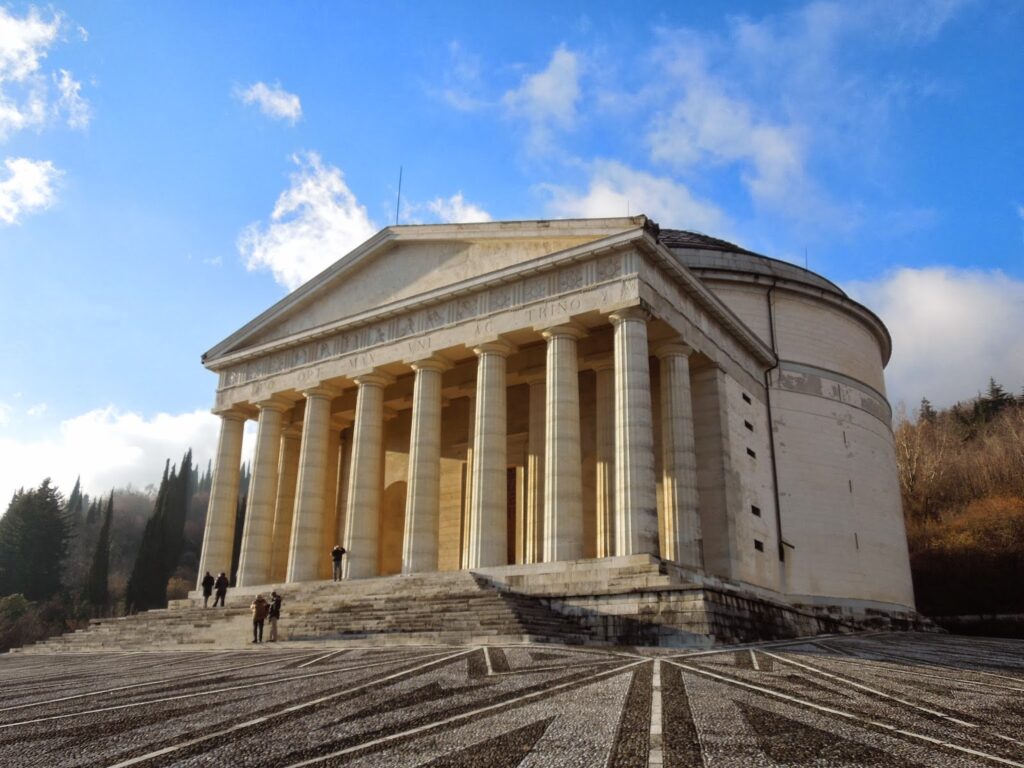
As many as 61 monuments, including crosses, tombstones, stelae, plaques and memorial stones have been preserved from the neglect of time. Among them is the Military memorial of Nervesa della Battaglia, which collects the remains of Italian fallen soldiers during World War I.
These are. hiking fulcrums with itineraries for biking or walking, traveling through history.
One of the most picturesque corners of the Marca Trevigiana reveals an ancient water mill, the foundations of which rest on the bare rock (the “croda” of the mountain). The Molinetto della Croda, a characteristic example of 17th-century rural architecture, ground its last flour in 1953. However, its millstone is still in operation today.
It is possible to visit its interior, which is used as a milling museum and houses various exhibits, and follow the path up to above the waterfall. The total cost of this experience is 4 euros per person (free up to 14 years old).
An unusual place, ideal for lovers of brutalist architecture, the Brion Tomb Is located in the cemetery of St. Vitus.
This is a monumental funeral complex designed for two spouses in 1969. The author is the architect Carlo Scarpa who, after working on the project for ten years, also wanted to be buried there. Part of FAI heritage, the hard lines and gray concrete of the Memorial blend in with the Venetian countryside, dotted with greenery and crisscrossed by canals.
The cost of the guided tour is 10 euros.
The castle of Conegliano is the Medieval and historical hub of the city, of which it is the identity symbol. Characterized by its city walls and towers, it houses a museum with frescoes, tombstones, armor, documents and exhibits of local history. At the top of the castle is the terrace from which you can admire the stupendous panorama, which ranges from the mountains to the sea.
Full tickets cost 2.50 euros, and there are reductions for children, university students, the over-65s and the disabled.
Tombola Hill derives its name from tumba: ledge, elevation of land. Of considerable scenic interest, the view from the hill grasps the entire surrounding plain, reaching on clear days as far as Venice.
A suggestive path connects the hill with Susegana, passing through castles, fortresses and unspoiled nature. Traversable on foot or by bike, it stretches 6.5km and is of medium difficulty.
The Church of the Templars in Ormelle was probably built in the 12th century by the’Monastic-military order of the Knights of the Temple, which was succeeded in the 14th century by the Knights of Malta.
The Templars settled in this place where one of the ancient Roman routes ran: the Via Opitergium-Tridentum (Oderzo-Trento), very close to the Via Postumia which connected Genoa to Aquileia.
Lonely, mysterious and isolated in the middle of the Treviso countryside, the charm of its Romanesque architecture blends with various pictorial testimonies. The church can be freely visited from the outside; guided tours require an appointment.
 Italian Italian
 English
 French
 German
 Spanish Italian Italian English French German Spanish