The Sile Greenway: cycling from Treviso to Jesolo

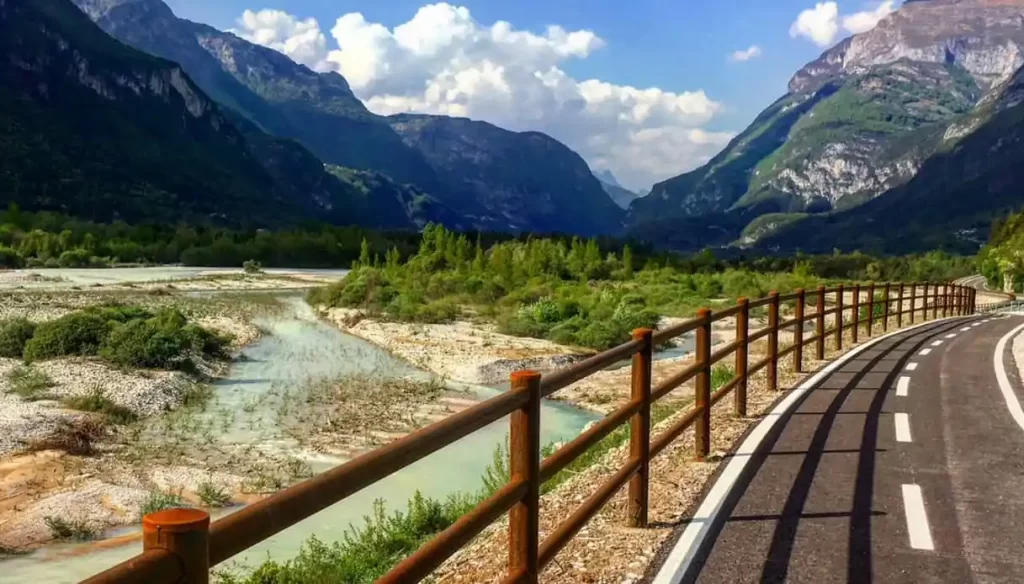
The Sile Greenway is a bicycle and pedestrian path that follows the course of the Sile River: Europe's longest resurgence river. The experience of cycling along it, from Treviso to Jesolo, reveals great natural and historical wonders of the Veneto region. It is one of the most popular routes for green travel lovers, so it is worth getting to know it better!

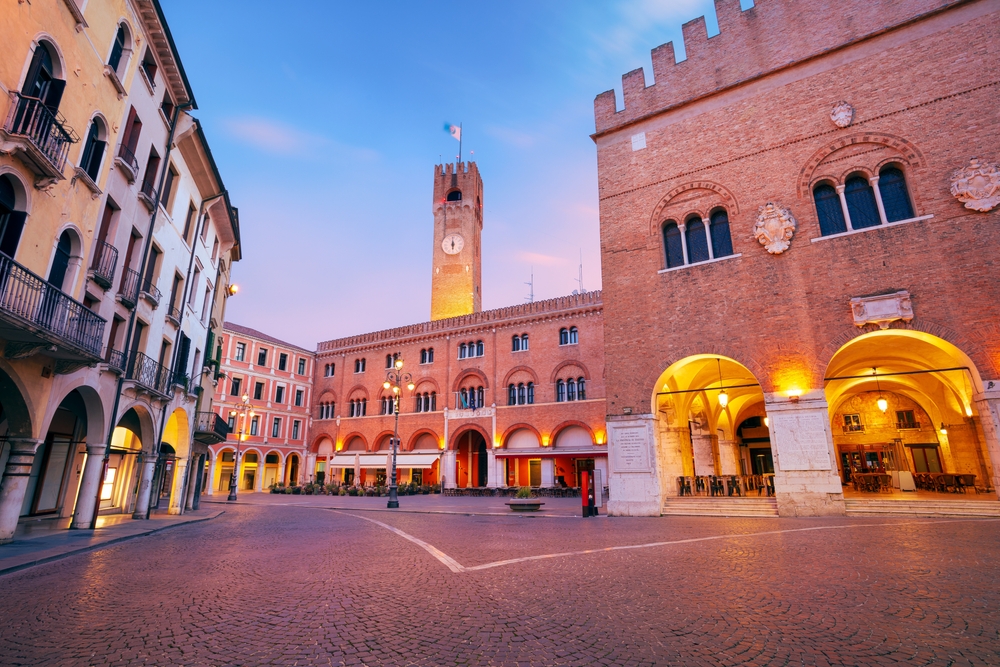
DEPARTURE: Treviso

ARRIVAL: Jesolo

DIFFICULTY: easy

BOTTOM: mostly unpaved

PROTECTED HEADQUARTERS: 87% of the track

FRUITABILITY: all year round

TIME: 05:01 hours with average speed 12.7 km/h

LENGTH: 52 km from Treviso to Jesolo Paese. From there another 2.5 km to Drago Square (Jesolo Lido) or 11 km to the mouth of the Sile (Cavallino).

Greenway itinerary: from Treviso to Jesolo

To bike the Sile Greenway, it is helpful to know its route and have a guide of the route which leads from Treviso to the seaside resort of Jesolo: the Jesolo Lido and/or the Cavallino Lido.

The Greenway follows the course of the Sile River, which rises between Casacorba di Vedelago (TV) and Torreselle, a hamlet of Piombino Dese (PD). Its course continues to the outskirts southwest of Treviso, from which the itinerary starts:

  1. The bike route starts from the Restera del Sile: the bank that in ancient times was used to haul, with beasts of burden, boats loaded with goods.

    Precisely, the start is the Parking Port of Fiera di Treviso.
    From here, taking the inner Stradella C, we come to Via Alzaia: we are on the left bank of the Sile.

  2. From via towpath you have to continue keeping the river to the right, until you reach an area of archaeological interest that houses large mill buildings. At this point you pass under the tangential.

  3. At the height of the’Island of Villapendola, there is a narrow stone bridge on the right.
    After the latter, you have to turn right and then left to take the via Caps.

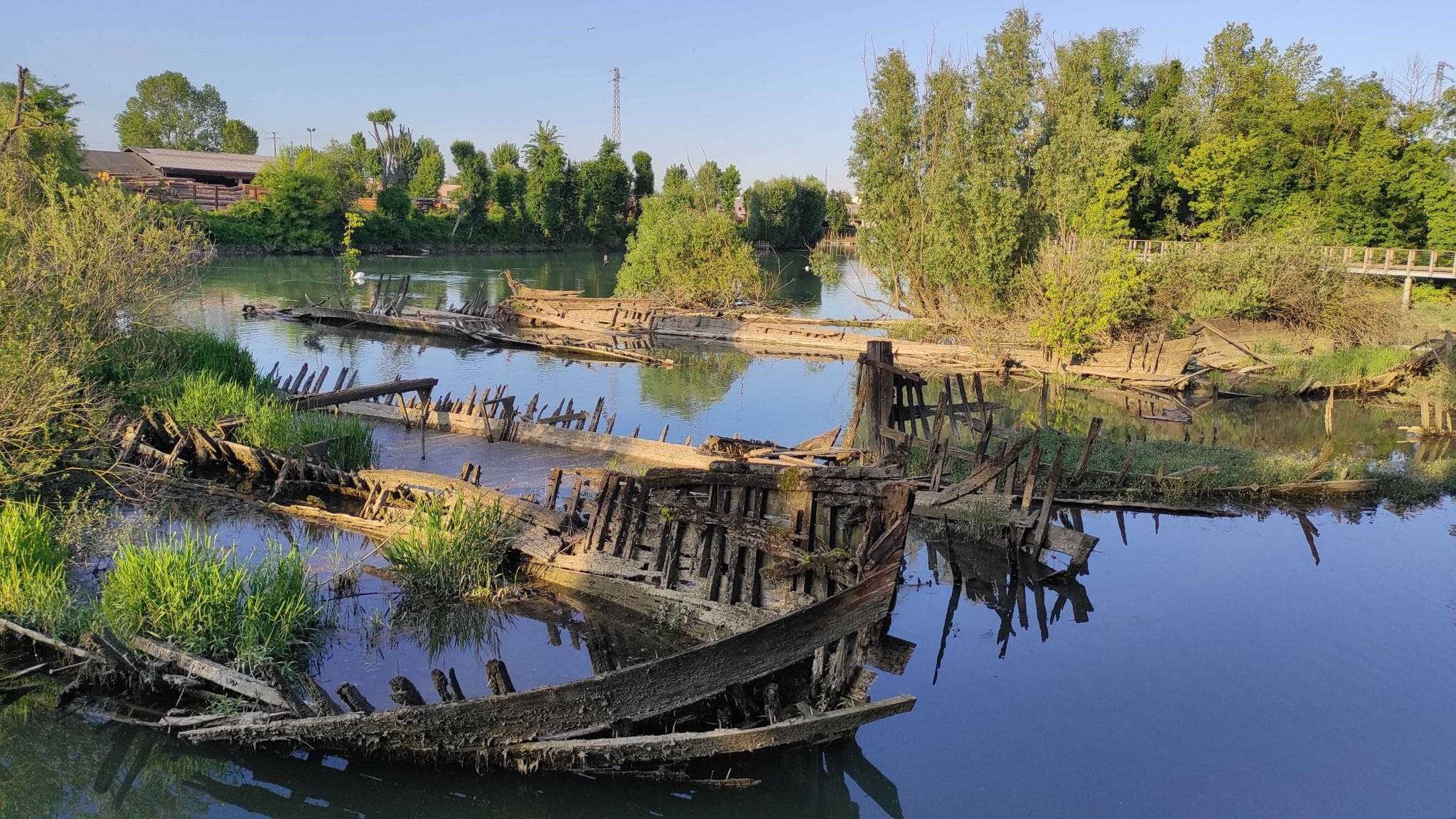
  4. The path leads to the Green Lake, past which is visible on the right a wooden bridge leading to the Burci Cemetery. Wooden footbridges unravel from here: beware, you must get off your bike and walk this swampy stretch!

  5. Having passed that step, we return to the embankment to reach the vicinity of Casier: the first town washed by the river after Treviso. The Greenway route leads to the quaint little port, adjacent to the square.

  6. Just beyond that, continuing along the embankment, we come to a short section of the bike path with water on both sides. Here the landscape is embellished by numerous Venetian Villas, clearly visible on the shore.

  7. Shortly after passing the highway bridge, there is a short stretch that forces one to leave the embankment. In fact, one must travel along the SP67, and then resume the bike path at Lughignano.

  8. This resumes on dirt road to Villa Mantovani Orsetti and continues on asphalt to via Rivalta, Vicinal Street and finally via Belvedere.

  9. One finds oneself at Casale sul Sile, where the trail crosses the river and passes on the left bank, continuing for a few kilometers in a southerly direction. This is one of the most popular sections of the Sile Greenway, thanks to bends and vegetation that make the trail very attractive.

  10. The bike path reaches Musestre, a hamlet of Roncade. Here one encounters the Tower of Eberardo: what remains of a medieval castle built by Lombard hands.

  11. Passing through the Oasis of Trepalade, the greenway route leads into the township of Pontegrandi: ancient mouth of the Sile River until the creation of the “cut” by Venetian hands in 1683.

  12. After crossing the lock, the bike path enters the lagoon eaves: you have to ride a straight 11km to Caposile, arriving near a pontoon bridge.

  13. To get to Jesolo, you turn right about 200m before the bridge: you take a newly built dirt road that follows the bends of the river for about 6km. This section offers a splendid view of the lagoon and ends with the remains of the ancient Caigo tower.

  14. Here the bike path stops: to get to Jesolo Paese you have to ride 4 km along the ordinary roads.

When you reach the center of Jesolo, cross the river on the pedestrian bridge and you will find the urban bicycle network. Following it, you will reach Jesolo Lido or Cavallino.

Useful information and advice

To bike the Sile Greenway and ensure the best experience, a few additional tips and information are helpful:

  • The bike path is all flat and does not cross any high-traffic roads. These are mainly natural areas, interrupted occasionally by a few sections on paved roads. The latter are, however, little frequented by cars and do not present any particular dangers. Clearly, it is always important to be careful in any case.

  • La cycle path from Musestre onward is mostly devoid of trees and useful vegetation to provide shelter. So, especially in the summer season, it is important to consider this factor and shelter from the sun: it is advisable to wear a hat and sunglasses.

  • Before arriving in Jesolo, near the lagoon and countryside, one can encounter the following many gnats. Again, and especially in the warmer and more humid months, it is advisable to have sunglasses and possibly repellent.

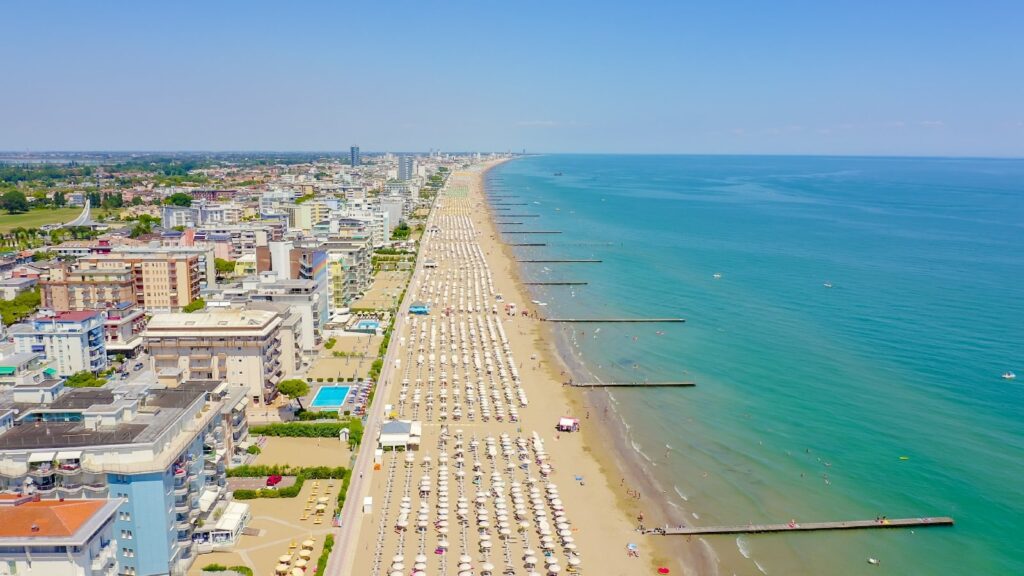
After finishing the trail, on hot days it is a good idea to take a plunge into the sea and indulge in some relaxation in the bathing area of Jesolo. So why not bring along a bathing suit and a towel?

Places of interest along the greenway

Cycling along the Sile Greenway, one has the opportunity to encounter the following. many places of interest: It is worth getting to know them to further appreciate the experience by indulging in a small visit to discover natural and historical places.

  • Restera del Sile
    As mentioned, this is the bank formerly used to tow boats filled with goods. It is an evocative glimpse of nature accompanied by the flow of the river, where it is possible to meet swans, swallows and ducklings.

  • Island of Villapendola
    It can be reached by crossing a narrow stone bridge. By skirting the Dead Sile, among lush vegetation, it is possible to go around the island and enjoy its beauty.

  • Burci Cemetery
    This is an archaeological site within the Sile River Regional Nature Park. This marshy area, equipped with walkways for walking, reveals among the reeds the relics of the burci: wooden cargo boats used until the 1970s. In addition to evidence of former trade, one can see geese, ducks, turtles and swans that now inhabit the place.

  • Casier
    It is the city center in which the aforementioned Burci Cemetery is located. Near its square, leaning against a wall, it is possible to observe a hydrochronometer: a clock that uses the water of the Sile as its energy source. In addition, from the square itself it is possible to enjoy a wide view of the bends of the river and the port on the Sile.

  • Church of Lughignano
    La Church of St. Martin in Lughignano has ancient origins: Lombard or Carolingian. Of the original structure, the Romanesque apse and bell tower, in lagoon style, still remain. Inside there is a well-preserved 16th-century crucifix on the right side of the presbytery.

  • Villa Mantovani Orsetti
    With a 19th-century neoclassical appearance, the Venetian Villa is at the center of an agricultural estate with a beautiful garden.

  • Casale sul Sile
    La Parish Church of the Assumption, dating from the 1700s and located near the river, stands out for its artistic significance. Among the valuable frescoes is the one on the ceiling of Giandomenico Tiepolo. Adjacent to the church, the historic rectory, one of the oldest Ville casalesi (16th cent.), is still visible.

  • Musestre.
    Here is the Tower of Eberardo, historic ruin of the Lombard castle dating back to the 9th century. Given the intense trade relations of the time, the tower served as a Venetian customs house.

  • Trepalade Oasis.
    In this natural oasis it is possible to observe the typical local flora and fauna, riparian thicket and hydrophilic forest. Plenty of birds, insects, reptiles and amphibians live among the lush wild vegetation.

  • Caligo Tower.
    Dating back to the early medieval period, this is an ancient fort historically employed as a military garrison. It was used to charge tolls to those who wanted to enter the lagoon.

At this point all that remains is to enjoy the ride!